
By Anita Deeg-Carlin, Director of Intercultural Learning
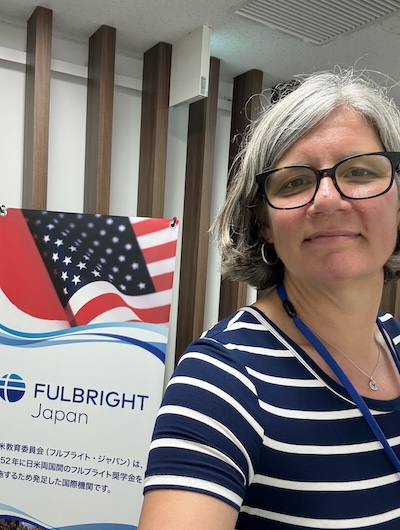
Konnichiwa and thank you for your interest in my Fulbright experience in Japan! It was my first time to visit the Asian continent and I am so grateful for the opportunity. After supporting student Fulbright applicants for many years, I decided to pursue an “adult” Fulbright opportunity myself, and began researching the International Education Administrators (IEA) Awards a few years ago. IEA destinations included Germany, France, India, Israel, Japan, South Korea and France/Senegal (a multi-country program). Each IEA has a slightly different mission and applicant profile, but Japan appealed to me since I had no prior experience on the Asian continent, and I connected to the Japan-US Educational Commission’s (JUSEC) emphasis on “enhancing the international dimension” of higher ed institutions. Diversifying all aspects of our international learning community is a priority for my work, so this felt like a great match.
Thanks to the helpful support of Associate Director of Corporate, Foundation, and Government Grants Betsy McCormick, FCGS Directors Masami Imai (former) and Steve Angle (current), and Deputy Provost Roger Grant, my second attempt to apply for the Fulbright IEA award in Japan was successful and I prepared for a mid-June departure.
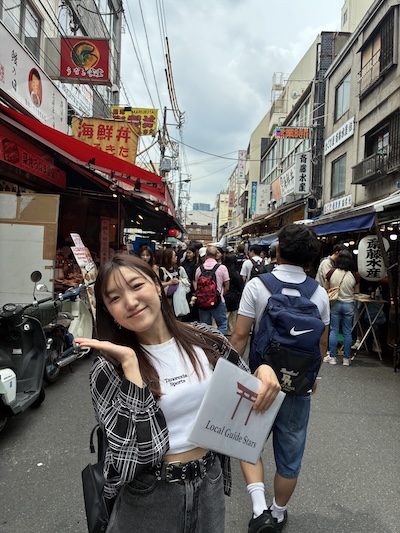
I was concerned about the long flight, but I’m a good plane sleeper so after two seasons of Ted Lasso and several good naps, I was feeling great when we landed in Tokyo’s Haneda airport. My cohort included international education colleagues from across the country – from UC Chico, CA to Northeastern University in Boston, the seven of us were fast friends and spent our first Sunday touring a Tokyo fish market and checking out the Imperial Gardens. We were immediately struck by the affordability of the city, the frequent and (to us) mysterious ceremonial parades we came across, the unbelievable cleanliness and ingenuity on display everywhere, and the diverse plenty of the seven-eleven markets. Everything seemed designed with the experience of regular people in mind – what would appeal to people? What would be convenient for people? What would make the most sense for people? I found myself constantly grateful, and was quickly smitten with the place.
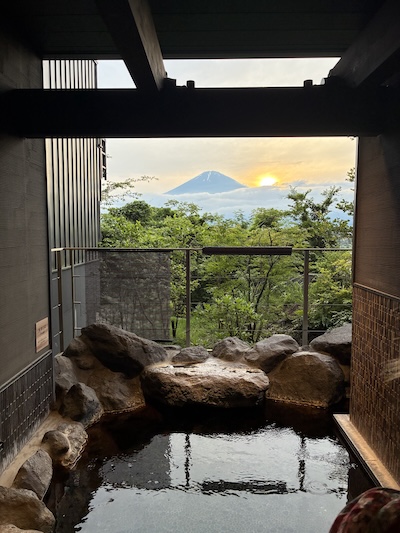
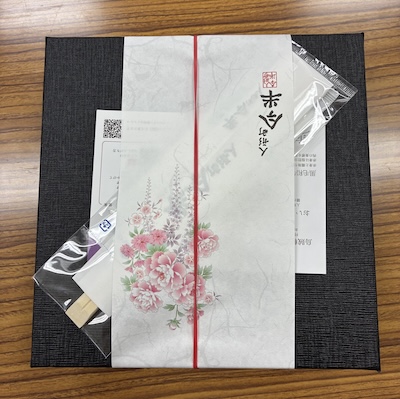
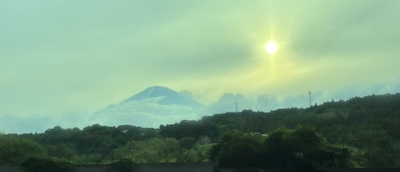
The next few days were a series of adventures organized by the incredibly attentive JUSEC staff. From our first Bento Box Lunch to mastering the Suica card that gets you on trains and buses, and even works like a debit card, a quick crash course in functioning in Tokyo made us feel at home very quickly. Representatives from EducationUSA, which provides advising centers in 170 countries with support of the Dept of State, gave us an orientation to studying abroad from the Japan perspective. A few of us made our way to a traditional “onsen” during a free afternoon – these remarkable manifestations of Japan’s commitment to self-care felt shockingly luxurious to us American employees. In our beautiful, natural hot spring-fed bathing spot, we got to watch the sun set over Mt Fuji and enjoy an unforgettable gift of an evening, well worth our post-midnight return to the hotel.
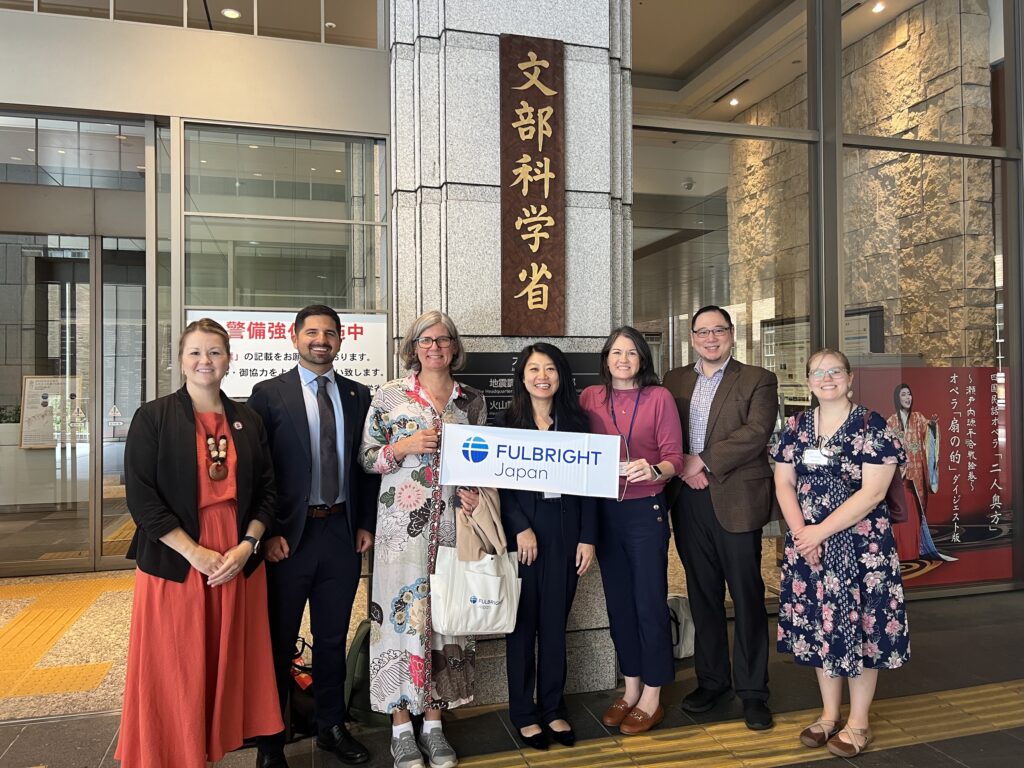
MEXT, the Ministry of Education, Culture, Sports, Science and Technology, was our next destination. MEXT oversees all things education including internationalization. Their staff gave us an orientation to the higher education landscape and facilitated two productive small group conversations with trainees of the LEAP (Long-term Educational Administrators) Program for International Exchange. One group discussed digital transformation in higher ed and the other explored staff exchange opportunities between US and Japanese universities. We also found various responses to Japan’s looming demographic cliff issue particularly interesting, and enjoyed learning about “KOSEN”, the National Colleges of Technology. KOSEN is a unique Japanese educational model that addresses shortages in technically skilled labor by partnering with industry. By offering highly practical and intense training, they can achieve extraordinary results in employability and skills acquisition.
A former Fulbright Graduate Student at Columbia University, Mr. Yuzo Kawamura currently works for Accenture Japan, and volunteered to explain Shukatsu to us. Shukatsu is the unique term referring to the Japanese version of job hunting. We learned about the unique seasonal hiring process in Japan, and the challenges of language – both for Japanese students learning English and for foreign students learning Japanese.
Sophia University staff provided us with an unforgettable experience. The oldest Catholic University in Japan, it felt like a microcosm of the international community. We were ushered into our first meeting room where each of us were given a Kaga Bo Hojicha, a roasted green tea drink – exclusively available at Sophia’s Starbucks. We savored every delicious drop, recognizing this might be the only time of our lives we’d enjoy such a unique and tasty treat! One young career advisor named Thais was particularly inspiring – originally from Brazil but fluent in both Japanese and English, Thais embodied intercultural competence as she effortlessly code switched between her English-speaking and her Japanese-speaking self, all the while so far from her own native Brazilian culture and Portuguese language.
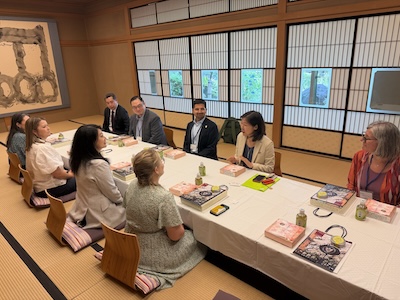
Lunch at Sophia was another unforgettable experience. We were ushered into the Kioitei, a beautiful traditional Japanese dining facility, where we removed our shoes and crossed the distinct Tamami mats to a sunken table where we comfortably sat down for an exquisite Bento box meal. I got to sit with Ms. Maki Nakano, an expert in global education who helped me better understand the value ascribed to the simple act of silence in Japanese culture.
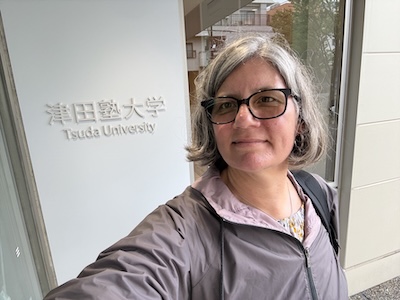
On Day 5, it was time to leave Tokyo for Hiroshima. Our first stop before leaving the city was Tsuda University, one of the first private universities in Japan for women. Tsuda University has an unbelievable story. A six-year-old girl called Umeko Tsuda was selected to study in the US with five other young women in 1871! Umeko returned home after her education abroad full of inspiration and founded this university. We could feel echoes of her courage and inspiration on campus, in the students, and particularly in the voice of Tsuda’s current president, Yuko Takahashi. President Takahashi had studied at Wellesley and exuded strength and resolve in her mannerisms. It was an honor to experience her and her staff. A highlight at Tsuda was the opportunity to hear from two students who had just returned from studying abroad in the States. They generously and candidly shared their challenging experiences with visas and stark cultural differences while assuring us that they loved their time abroad and wouldn’t hesitate to do it again. Their generous openness made us more sensitive to the needs of students coming from so far away: calm spaces, listening ears, and familiar food were among the suggestions I took away.
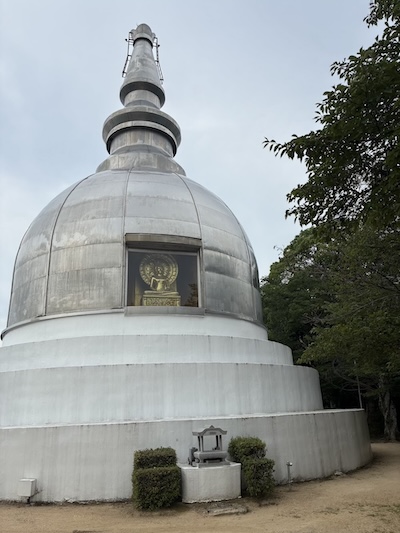
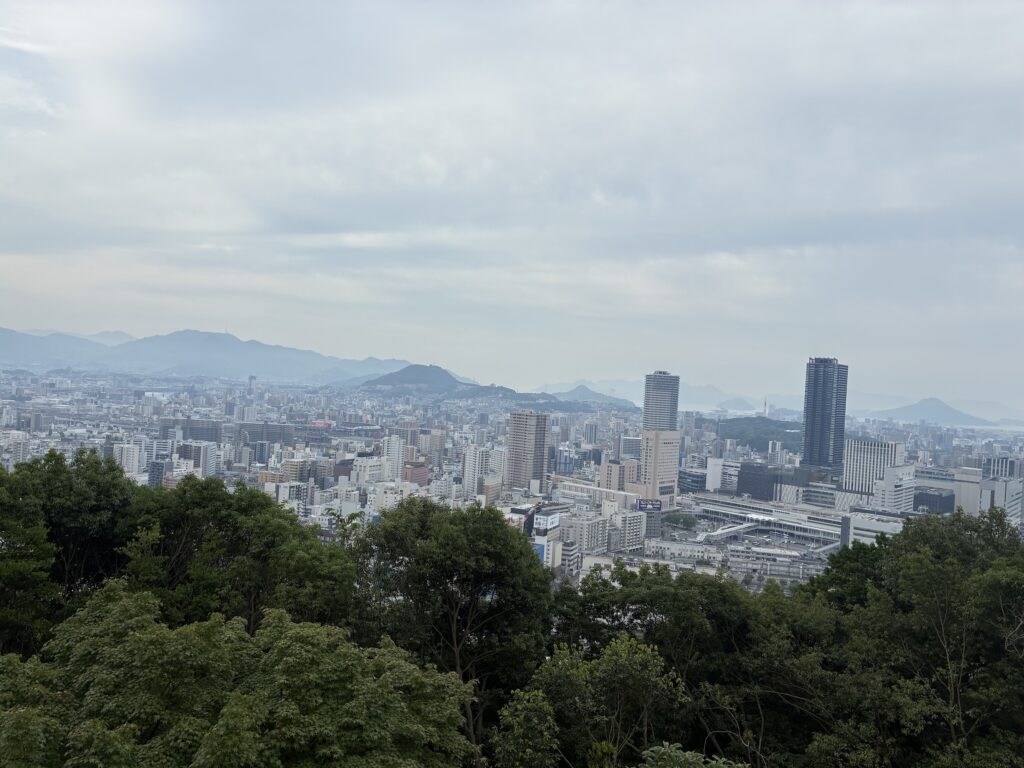
Hiroshima and Miyajima Island were absolute highlights of my experience in Japan. After a few of us braved an early morning hike up to the nearby Peace Pagoda, we spent the better part of a day at Hiroshima Shudo University, generously accompanied Mr. Akira Otsu, a regional Fulbright alum. We were warmly welcomed and thoroughly integrated into the university community. Following an orientation provided by Professor Daniel James, we enjoyed a cultural exchange workshop, lunch in the cafeteria, and a tour of the campus. I was particularly drawn to the Japanese Language and Culture Seminar, an intensive four-week program, that might interest Wesleyan students. I’ll be looking into that a bit more in the coming weeks!
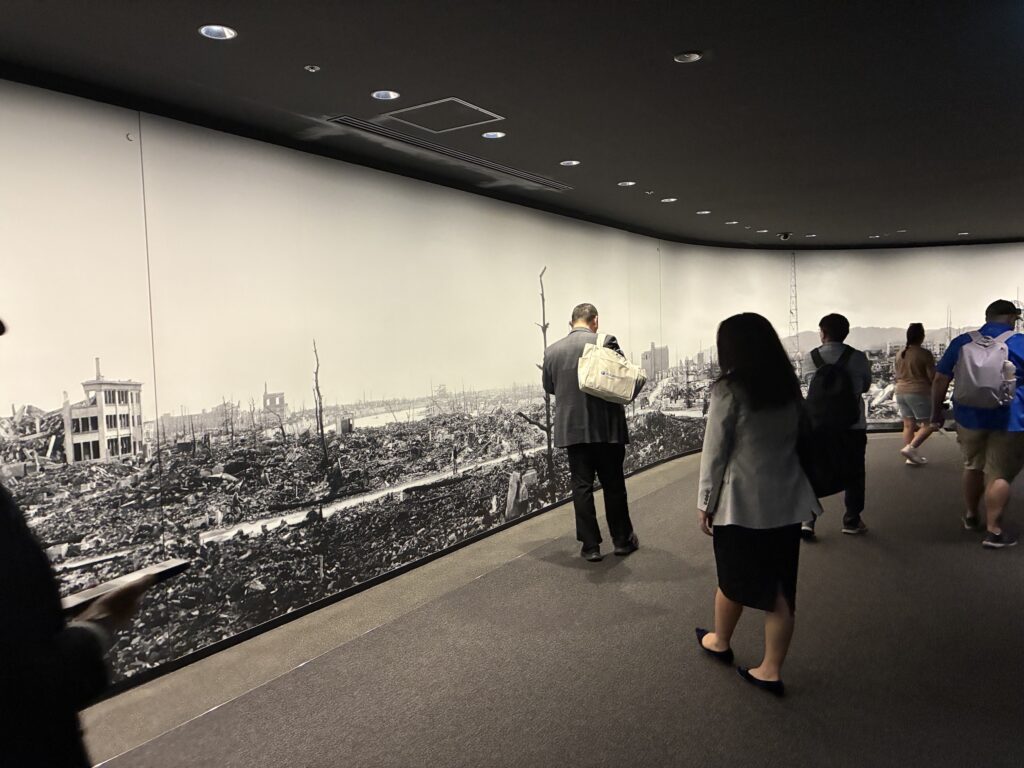
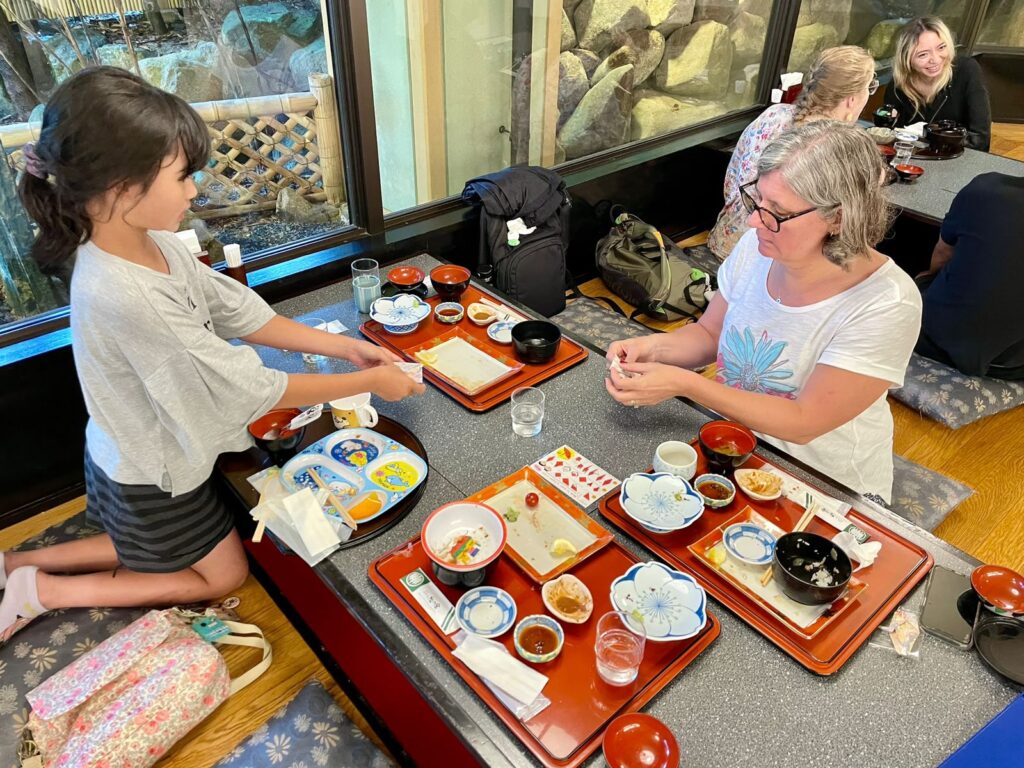
We spent the rest of the afternoon at the Hiroshima Memorial Park and historical museum, feeling the full weight of one of the ugliest hours of our mutual modern history. Story after story of not only the men, women and children who lost their lives in the initial moments of the atomic bomb’s explosion, but the lingering awareness that likely every local resident we were near had a relative or friend who, if they survived, was permanently damaged at least emotionally, if not physically by the long-term effects of radiation sickness. Sitting at lunch with some friends of the program, a mom and daughter pair folded origami cranes while matter-of-factly sharing their own (grand)father’s struggle with his post-WWII health. He had been outside of the city that historic day, but rushed in the next day to find a friend. That heroic and loving decision cost him a lifetime of pain and illness and eventually an early death. The little girl shared how she was already taking “peace studies” at school – taught from kindergarten on – urging youth to welcome foreigners, value intercultural exchange, and make friends across difference. “Never again” is a universal commitment in that region that I will take with me forever. Fuka, as the young girl is called, sent me home with a crane she’d folded that had my own children’s names written in Japanese on its wings. May we all be affected by her loving invitation to never stop working together for peace.
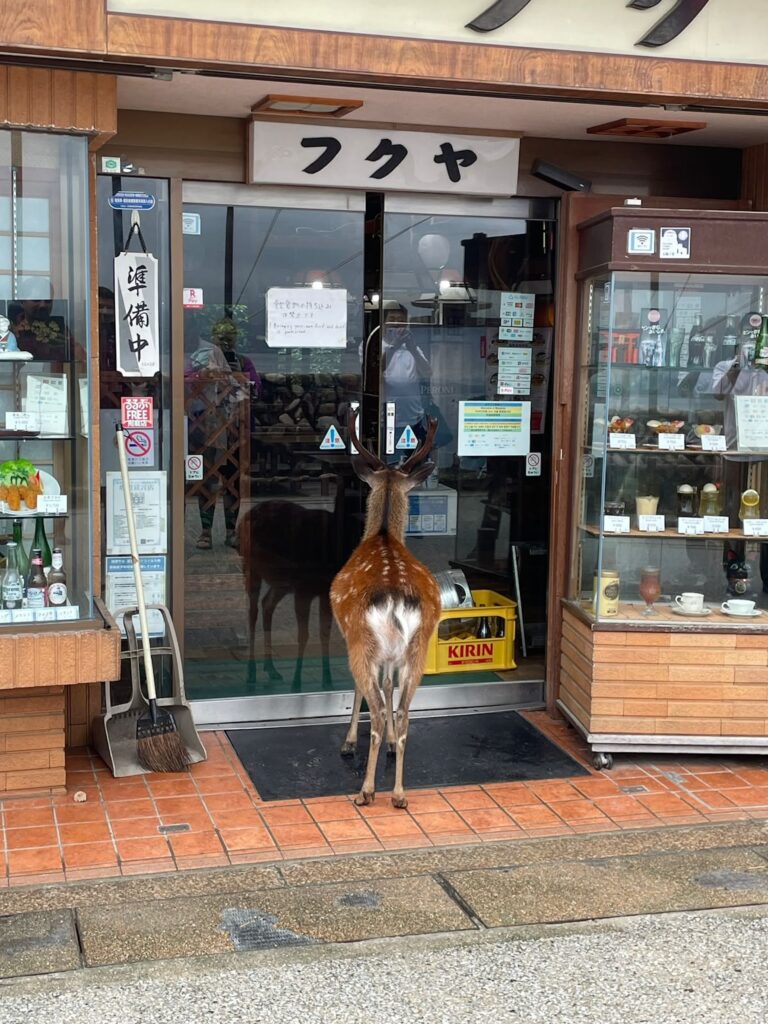
The next day led us to another extraordinary experience on Miyajima Island, a UNESCO World Heritage Site, rich with cultural history. The steady soaking rain did not dampen the experience as we enjoyed the ultra-friendly deer, the fantastic shopping, and the powerful spirituality of the place. The famous red (vermilion) O-Torii Gate historically served as the only path boats could take to arrive at the sacred island without defiling holy ground, reminding us that there is so much more to life than what meets the eye.
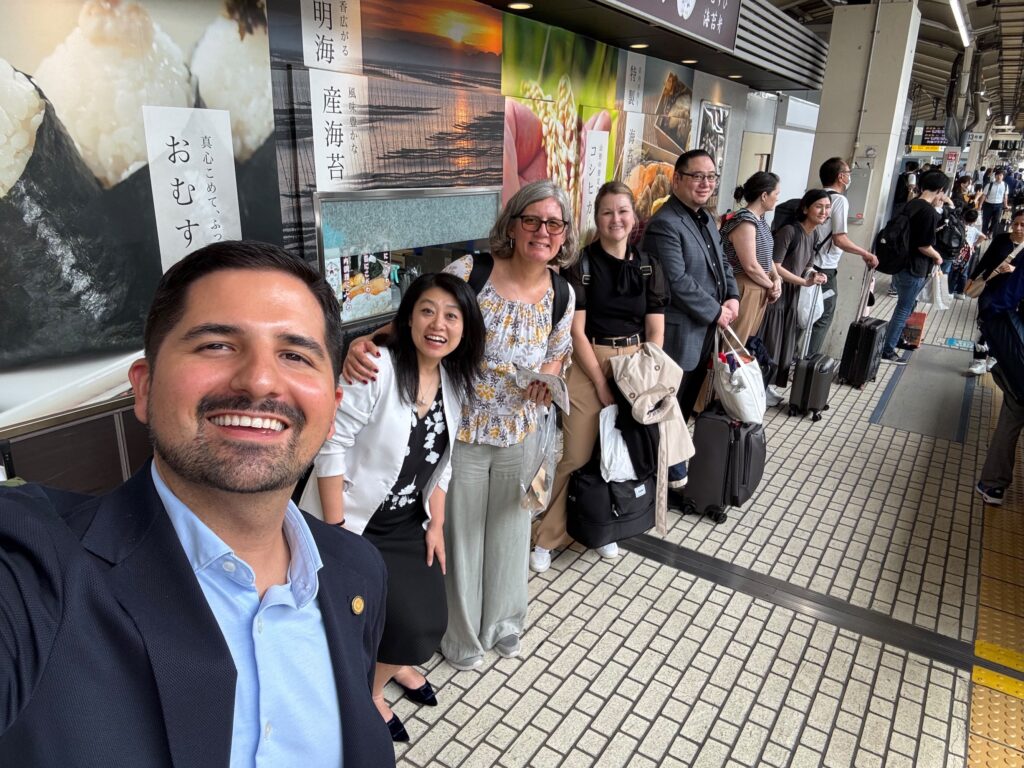
My last group experience other than the speedy return to Tokyo on the Shinkanssen train turned out to be a group cooking activity at the famous Okonomiyaki restaurant that last evening in Hiroshima. Grateful that our hosts prioritized this bonding and enjoyable experience, we savored this rare chance to immerse ourselves in the local cuisine.
My next 24 hours were a whirlwind turn of events for me personally as my mother’s deteriorating health demanded that I cut my trip short and head home immediately. That last night in Tokyo, I had time to enjoy a last onsen soak in the airport hotel. Surrounded by other mom’s, daughters, grandmothers, sisters, etc. in the gender-divided spa, I found myself grateful for the bridge in time between this geographic expansion of my reality and the upcoming transition my family was about to face. My mom passed away peacefully a few days later at my side, reminding me how precious life is and how lucky we are to experience the beauty of our world’s rich cultures.