
By Morgan Keller, Director of the Office of International Student Affairs (OISA)
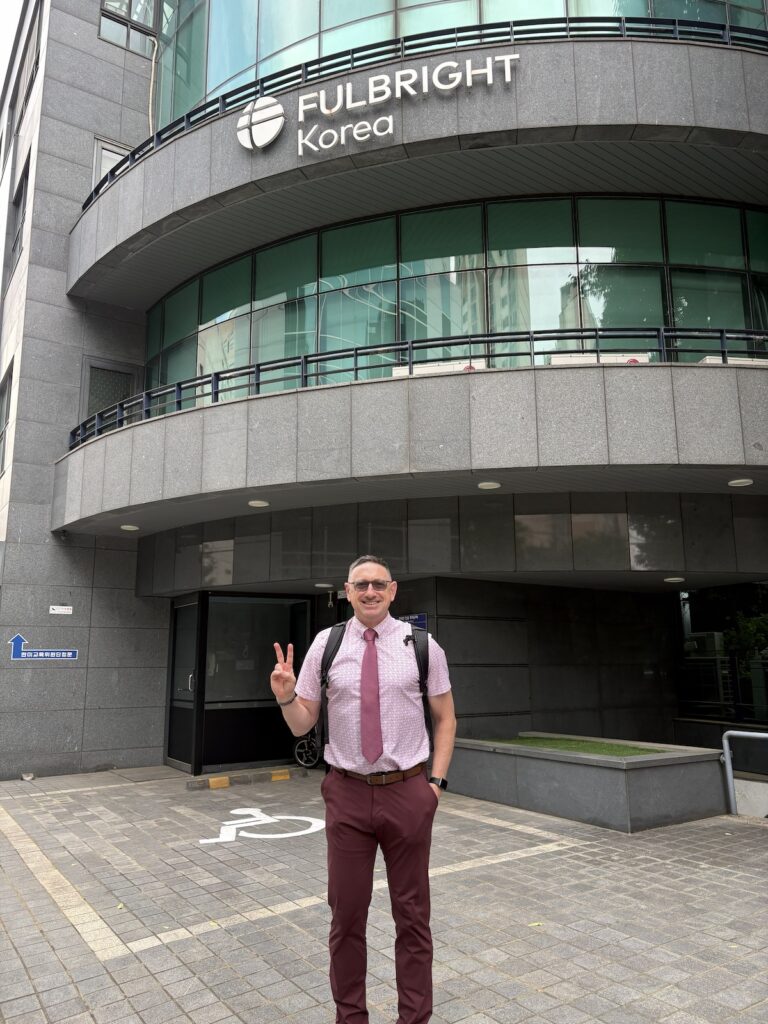
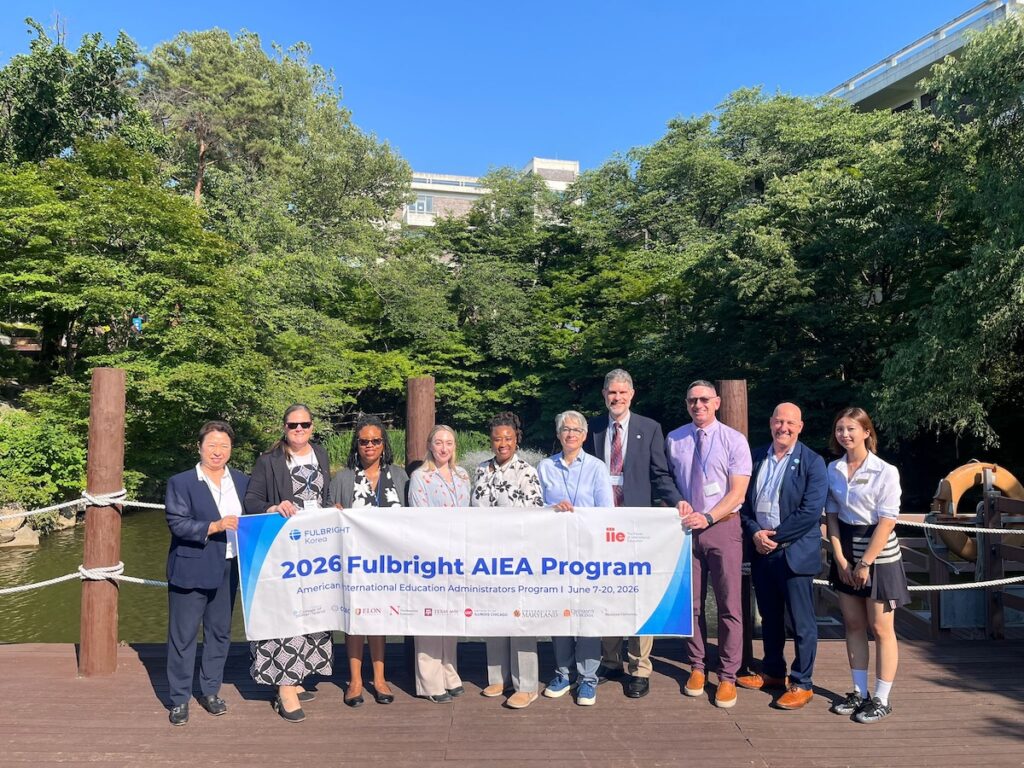
This past June, I had the wonderful opportunity to spend two weeks in South Korea as a recipient of a Fulbright International Education Administrators (IEA) Award. Over the course of the trip, I visited 14 Korean universities across the country with a cohort of eight other international educators from institutions all over the U.S., including Northeastern, University of Virginia, and Texas A&M among others. Through our group’s travels, we learned about the higher education system in South Korea and how different universities approach the work of internationalization on their campuses.
We spent our first week in Seoul, the capital of South Korea and the country’s largest city. I had been to Seoul once before for a long weekend years ago when I was teaching English as a foreign language as a JET participant in Japan. With more time to explore this magical city this time around, I not only had the opportunity to visit eight impressive university campuses—Sogang, Soongsil, HUFS, SeoulTech, Hanyang, Sungshin, Seoul Institute of the Arts, and Seoul National—but also the chance to see awe-inspiring sights like Gyeongbokgung Palace and Jogyesa Temple, amble up and down the Gyeongui Line Forest Park by night, and even try on a hanbok.
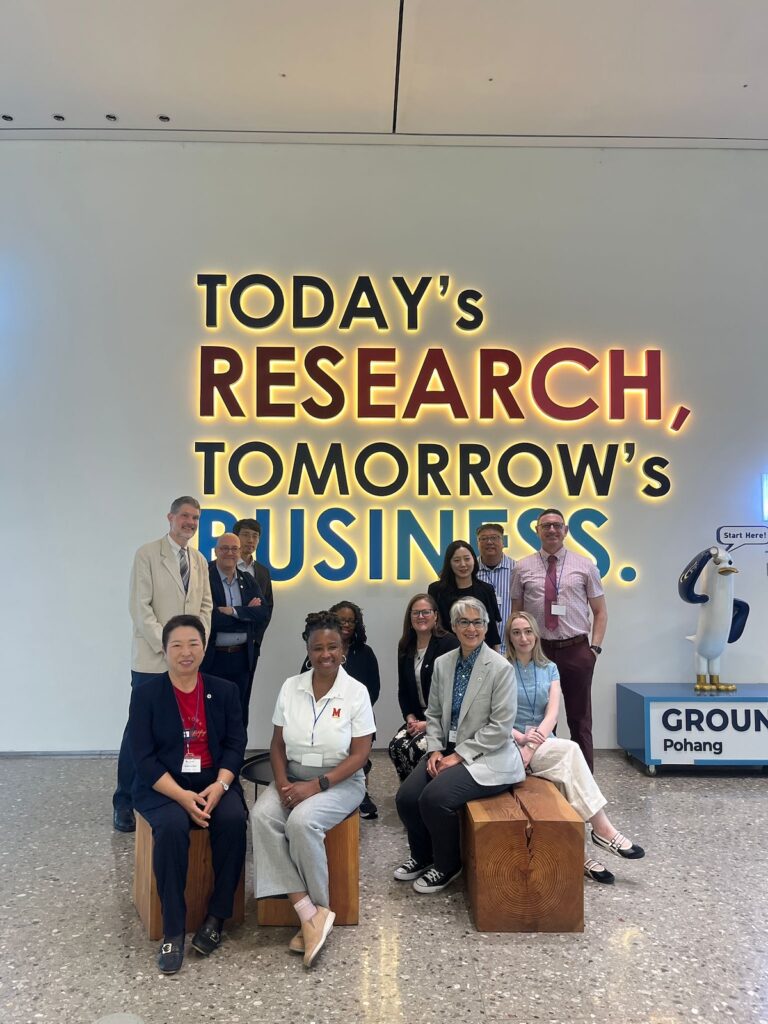
During our second week, we traveled out of Seoul to Gangneung on the scenic northeast coast where we explored and stayed at the otherworldly Hassla Art World, toured Ojukheon House and Anmok Coffee Street, and visited Kangwon National University. We then made our way south, visiting Hallym University in Chuncheon, POSTECH in Pohang, Kyungpook National University and Keimyung University in Daegu (South Korea’s 4th largest city), and finally Pusan National University in Busan (the country’s 2nd largest city) on the southern coast. Along the way, we visited the Gyeongju Historic Areas, a UNESCO world heritage site with breathtaking sights including the Gyeongju National Museum and its massive, resonant Divine Bell of King Seongdeok as well as Cheomseongdae Observatory, the oldest astronomical observatory in Asia, and possibly the world by some accounts. Indeed, it was a busy, whirlwind two weeks of traveling, seeing, meeting, learning, and eating (the “10 won bread” we discovered on Hwangnidan Street in Gyeongju was to die for!) for our Fulbright “delegation,” as we were respectfully referred to by our generous and hospitable institutional hosts throughout our trip.
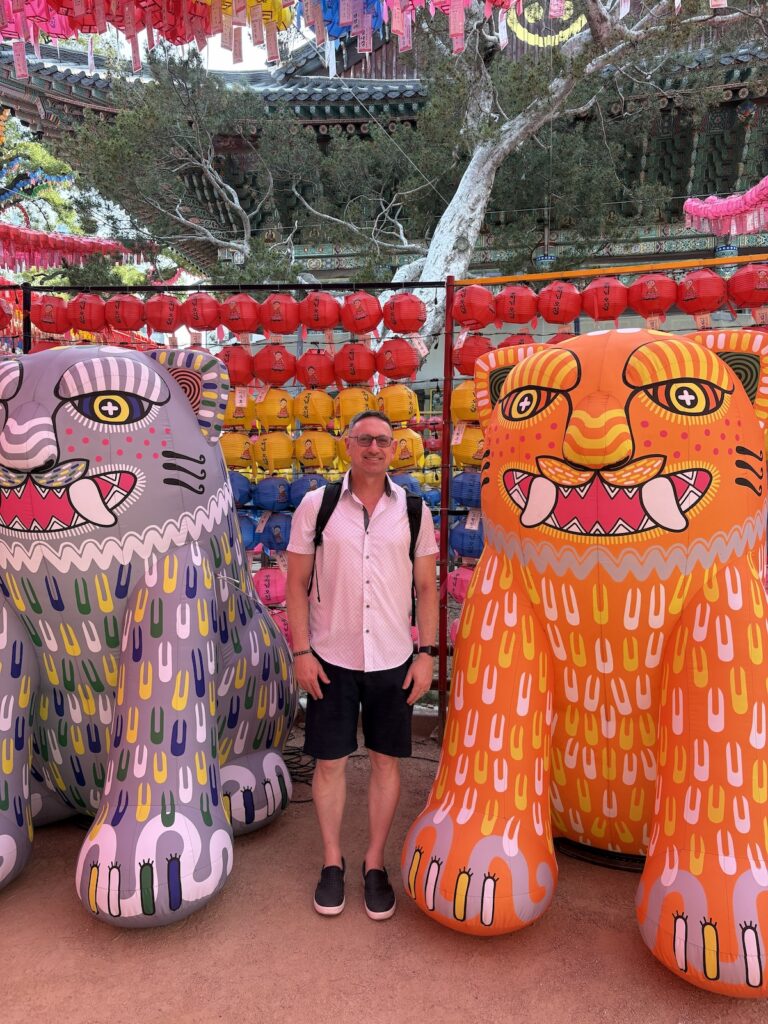
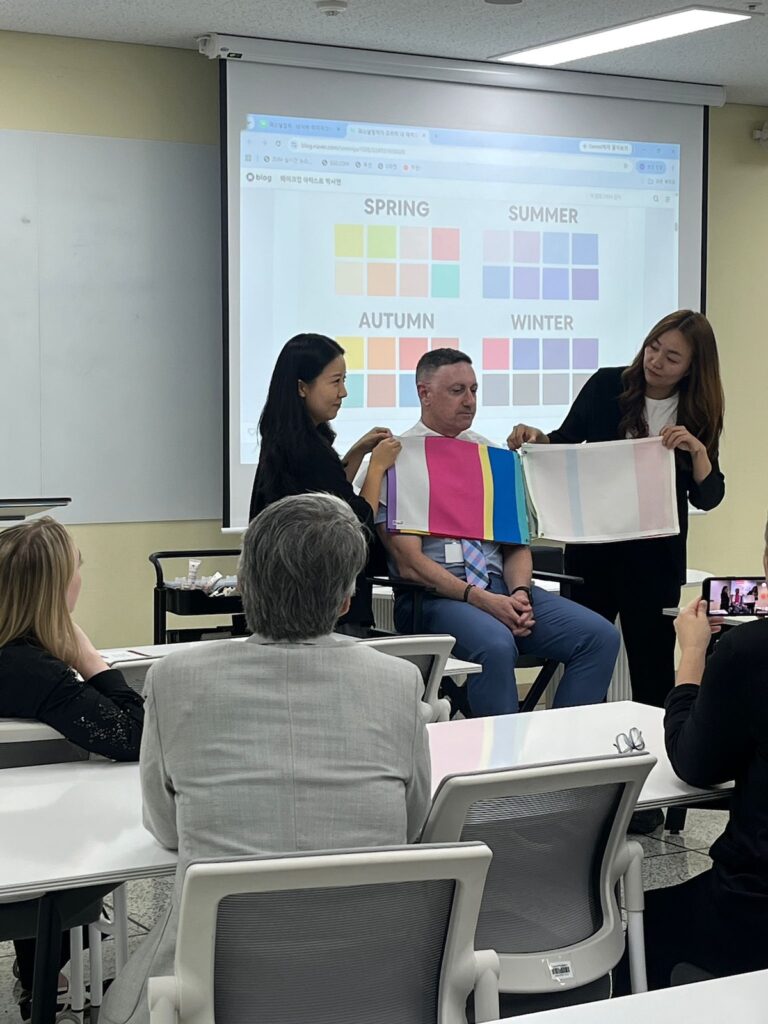
Thinking back on my time in South Korea now a little over a month since I returned, a flood of fond memories rushes through my mind: wandering amidst the vibrant and soothing scenery of Jogyesa Temple; having my personal color analysis done by beauty education faculty at Sungshin Women’s University (“winter” was determined to be my seasonal palette!); taking a night stroll along scintillating Gwangalli Beach in Busan where my cousin, Adam Keller ’14, a Wesleyan alum, once lived and taught for the English Program in Korea (EPIK); spending hours in community with new colleagues and friends, crisscrossing the beautiful countryside by bus, meeting Korean international educators, Fulbright staff and alumni, students, and even a chancellor; learning the word “Hallyu” (“Korean Wave” pop culture) and seeing a billboard of Jennie from BLACKPINK and proudly knowing who she was because my older daughter is a diehard “BLINK” (BLACKPINK fan); and trying new foods whose Korean names were lost on me in translation at the buffets, but not their delicious flavors.
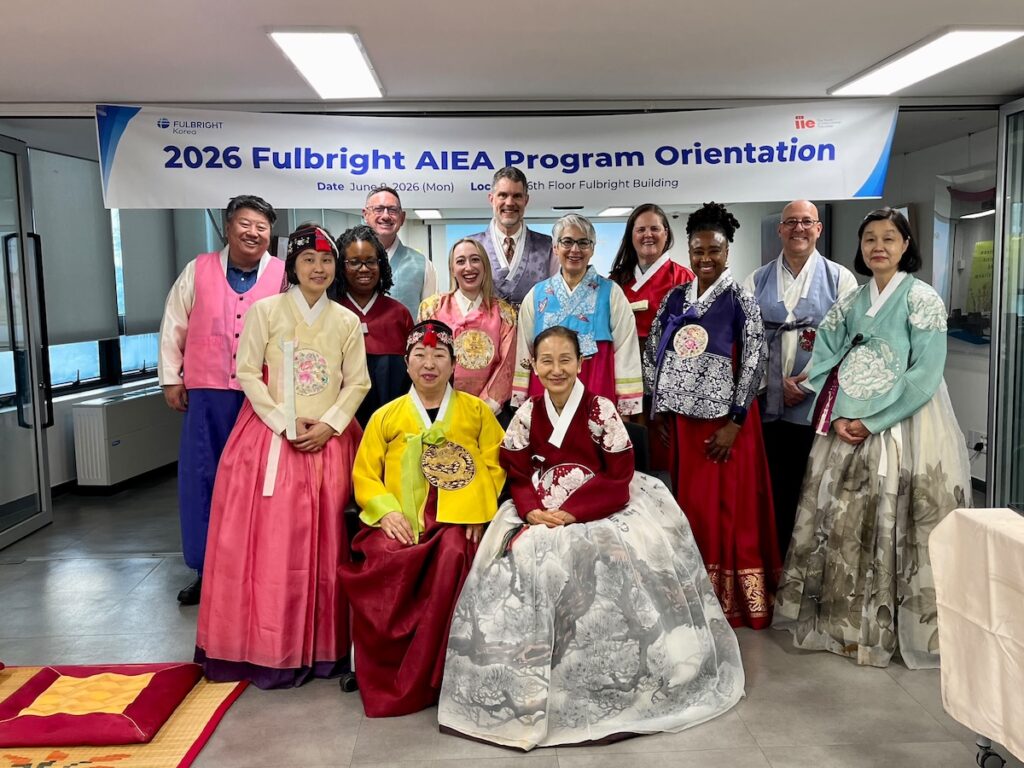
My Fulbright IEA seminar experience in South Korea was like a mini sabbatical, a short-term study abroad sojourn for an international educator. It was an experience I will treasure for the rest of my life. I can truthfully say that if I could wake up tomorrow an undergraduate student again, I think I would choose to study abroad in South Korea and return to that wondrous country to dive deeper into its language and culture. How about you? What part of the globe calls to you? Could you see your soul on the streets of Seoul?