
By Erica Kowsz, Associate Director of Fellowships
The Watson Fellowship gives newly graduated students the opportunity to pursue a personal passion project for a full year, beginning the summer after graduation. Wesleyan is one of 41 campuses to participate in the Watson Fellowship program, each of which can nominate up to four students to the national competition each fall. Nominees go on to interviews with the Watson selection committee. Those who are selected as fellows then spend a year outside the United States, without returning to any country in which they have spent more than four weeks prior to their fellowship.
This year, we have one Watson Fellowship winner: Tamira Le ’26. Le majored in the College of Social Studies (CSS) and Environmental Studies. She is an international student from Ho Chi Minh City, Vietnam. On campus, Le served as a Sustainable Middletown Intern, collaborating with stakeholders across campus and the local community to advance sustainability initiatives focused on energy efficiency, civic engagement, and waste reduction. She also served as a Hub Coordinator at Sunrise Wesleyan, where she organized events with political representatives to deepen campus understanding of environmental issues in Connecticut. During her time at Wesleyan, worked at a forest conservation NGO in Brazil and interned at a US renewable energy company. Through the SIT International Honors Program, she studied abroad in Morocco, Nepal, and Ecuador, where she focused on food, water, and energy justice. Le was also the CSS History Preceptor for the Sophomore History Tutorial on Modern European History. Le’s senior thesis on China’s renewable energy investments in Southeast Asia.
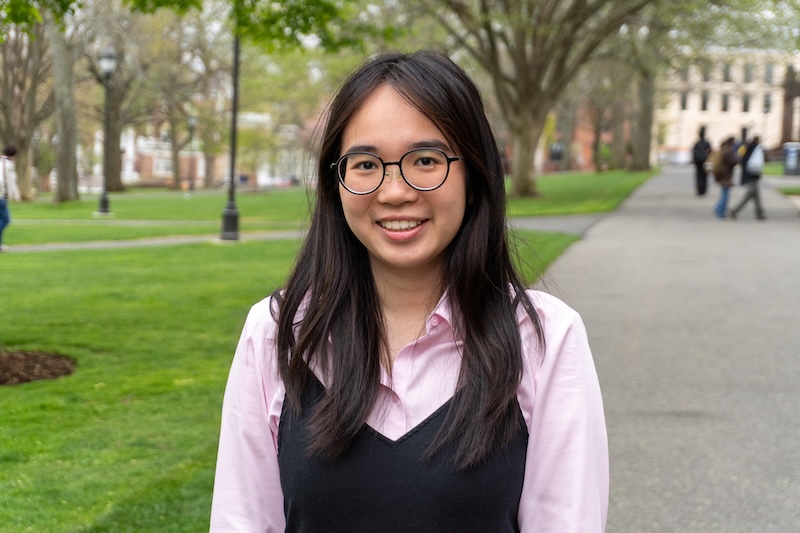
Le’s interest for building her life and career after graduation center on climate and sustainability work, specifically in advancing an equitable energy transition. As a Thomas J. Watson Fellow, Le’s project asks: How do community-owned energy projects sustain themselves and reflect the communities they serve? She will explore the successes and challenges of expanding decentralized, community-owned energy across different global contexts.