

By Lisa Lu ’27
During my study at the Kyoto Consortium for Japanese Studies, I am taking an elective course called “Kyoto Artisans and their Worlds.” This class explores Kyoto’s centuries-old artistic traditions through visiting workshops and engaging with artisans directly. Every Tuesday, we visit different artisans working with a variety of mediums, including textiles, bamboo, ceramics, and lacquer.
Kyoto, as a historically and artistically rich city, has preserved its traditional crafts through many multigenerational businesses over centuries. However, in the increasingly automated society, many artisans feel the need to reinvent their practices to adapt to the modern world. Through observing the production techniques and listening to their personal stories, we not only learn about each craft’s unique process, but also the struggles of traditional crafts in modern society.
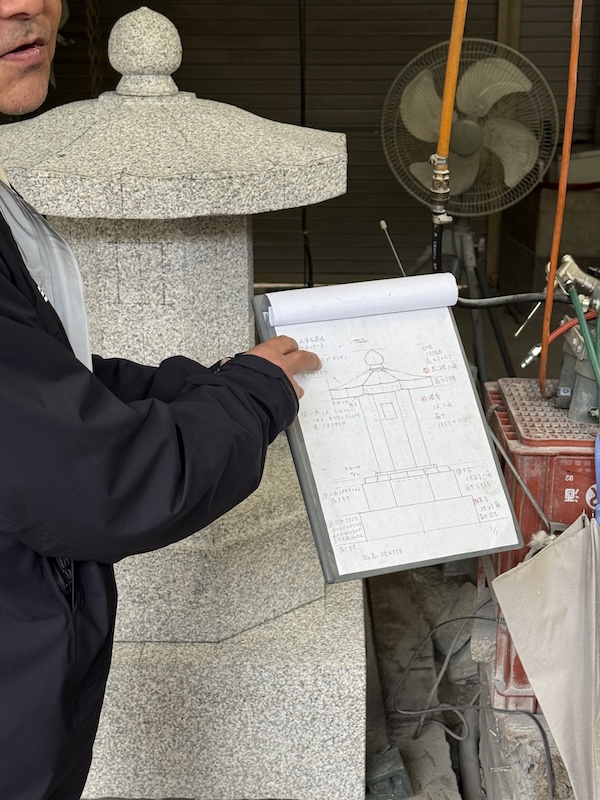
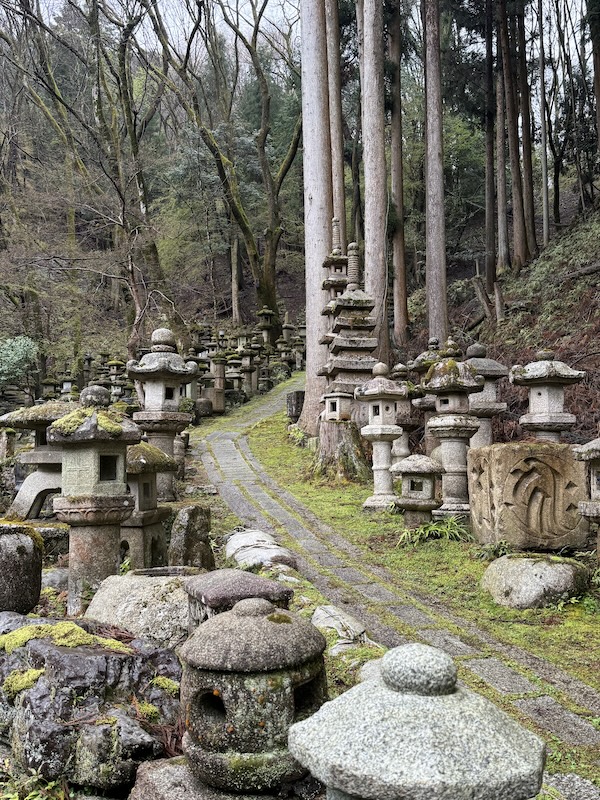
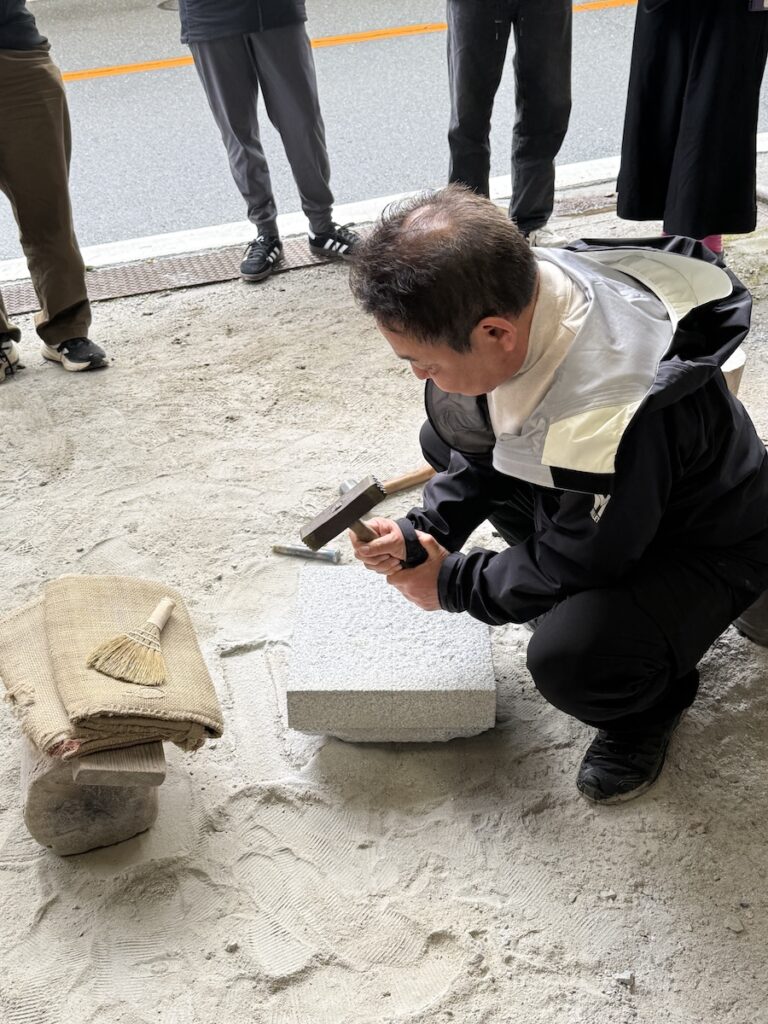
This Tuesday, we visited the Nishimura Stone Lantern Workshop run by the fifth-generation head Nishimura Daizo. In Japanese culture, stone objects are believed to carry a kind of spirit in gardens or sacred spaces. Unlike other stone lantern workshops in Japan, Mr. Nishimura’s workshop makes its lanterns almost entirely by hand, so a single lantern production would take an artisan three months to finish. Mr. Nishimura showed us the whole process of creating a sketch of the stone lantern, calculating measurements, carving the rough form, and shaping the surface with finer tools. After a lantern is made, they would leave it in the outdoor storage in the mountains, where the lanterns would rest for three to five years for moss to grow across the surface. This aging process reflects the Japanese aesthetic of imperfection and integration of nature, which allows the stone lantern to blend into Zen gardens.
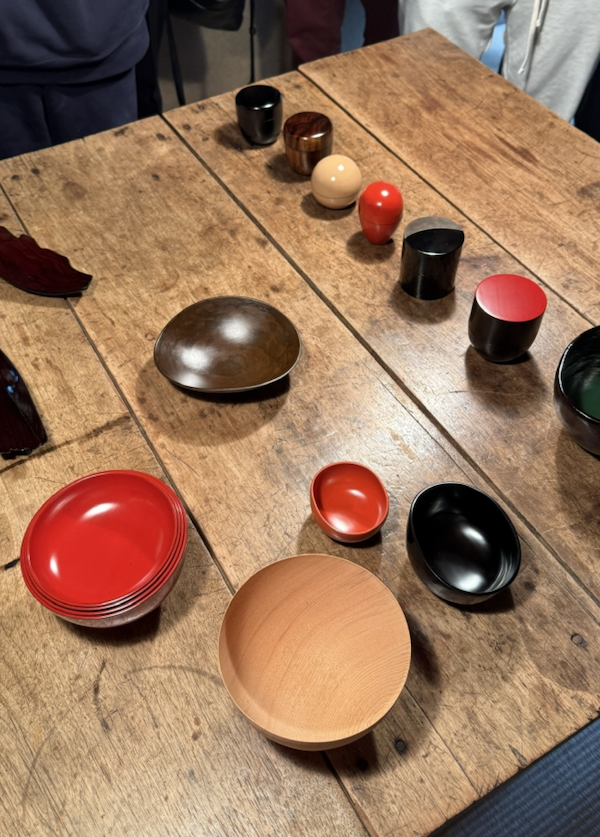
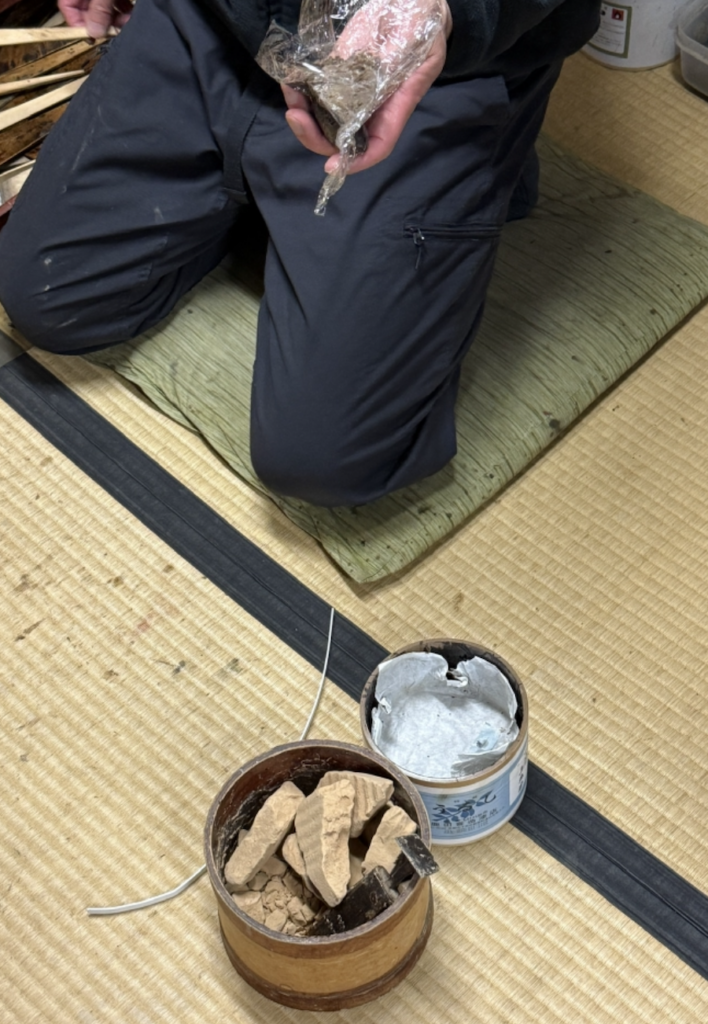
In this previous field trip, we visited the studio of Nishimura Keiko III. He is the third generation of his family that has specialized in the art of Urushi 漆 (lacquer). His work ranges from tea ceremony utensils, tableware, bentwood, and art pieces. Urushi is made from the natural sap of the lacquer tree, which only grows in Asia. The process behind lacquer production is very labor-intensive. People would cultivate lacquer trees for 10 to 20 years, only receiving 200 cc of lacquer in total from each tree.
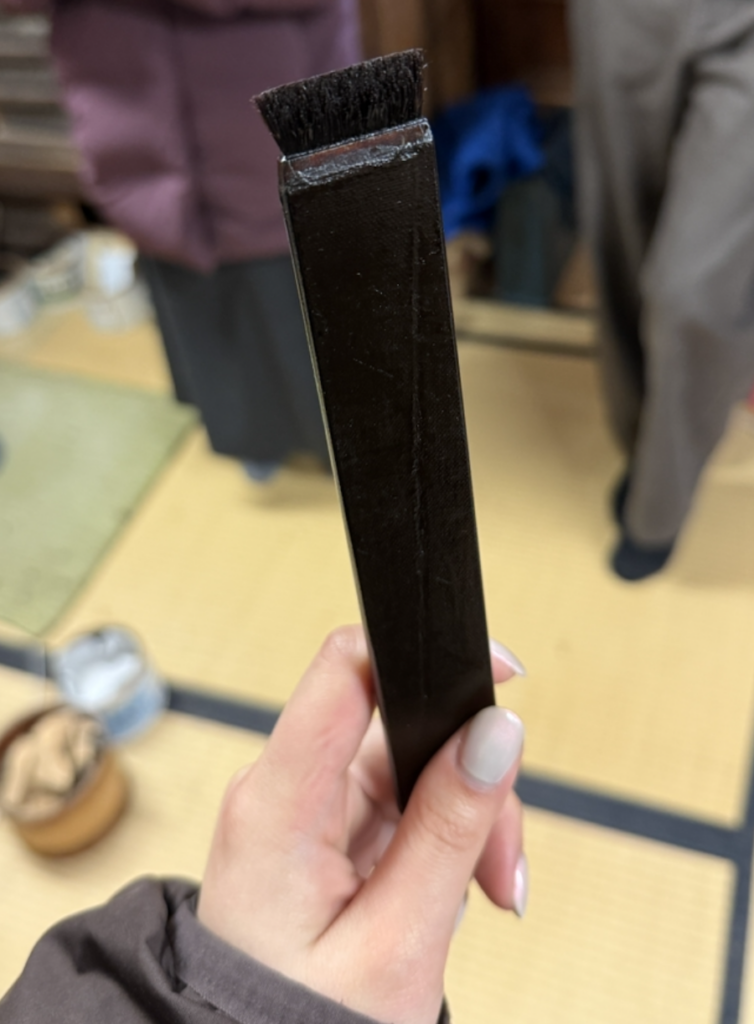
Today, the production of lacquerware is at risk of disappearing. The first big problem is the wood market’s vicious circle, made up of the declining demand for wood and the costly cutting down of trees. The second problem is the decrease in production of the tools used in lacquerware. The flat brushes used for applying lacquer are made of thick, long, and dry black hair, preferably sourced from individuals whose work involved prolonged exposure to seawater, such as pearl divers. However, as these professions disappear, so does the supply of hair for these brushes. Lastly, there are also issues with the planting of lacquer trees and the production of lacquer itself. Now, 95% of the lacquer used in the studio is imported from China due to a decline in lacquer in Japan. Yet China is also undergoing modernization and a decrease in lacquer production. Thus, the survival of this craft is not only dependent on people but on an entire system of natural materials, tools, and knowledge.
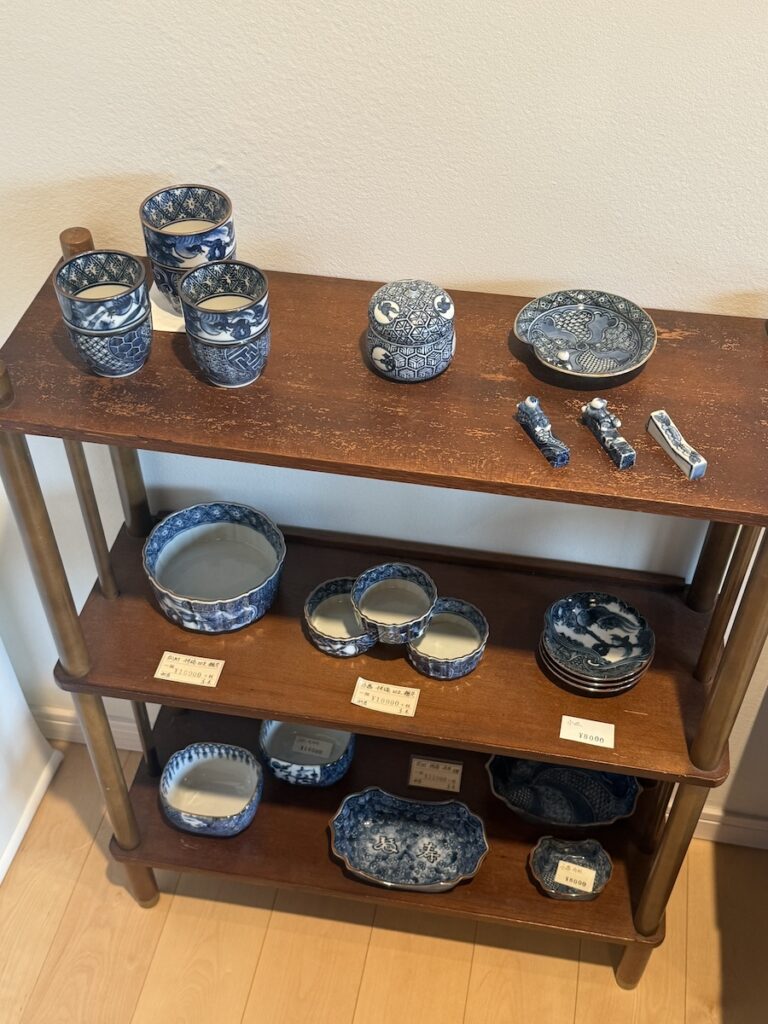
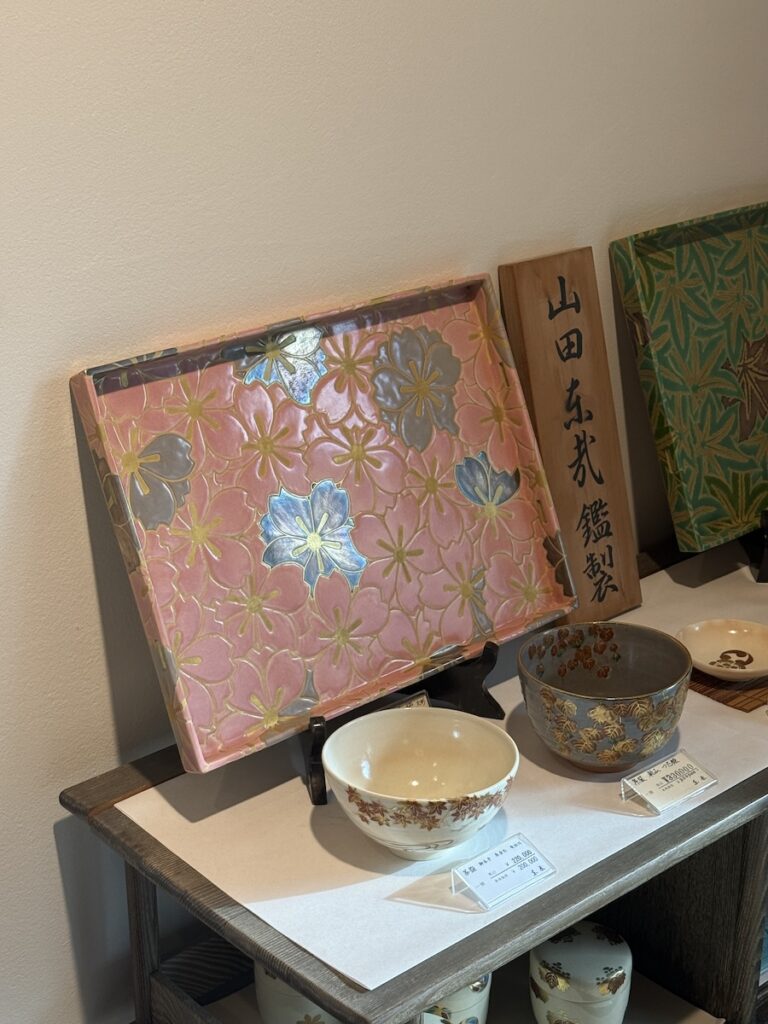
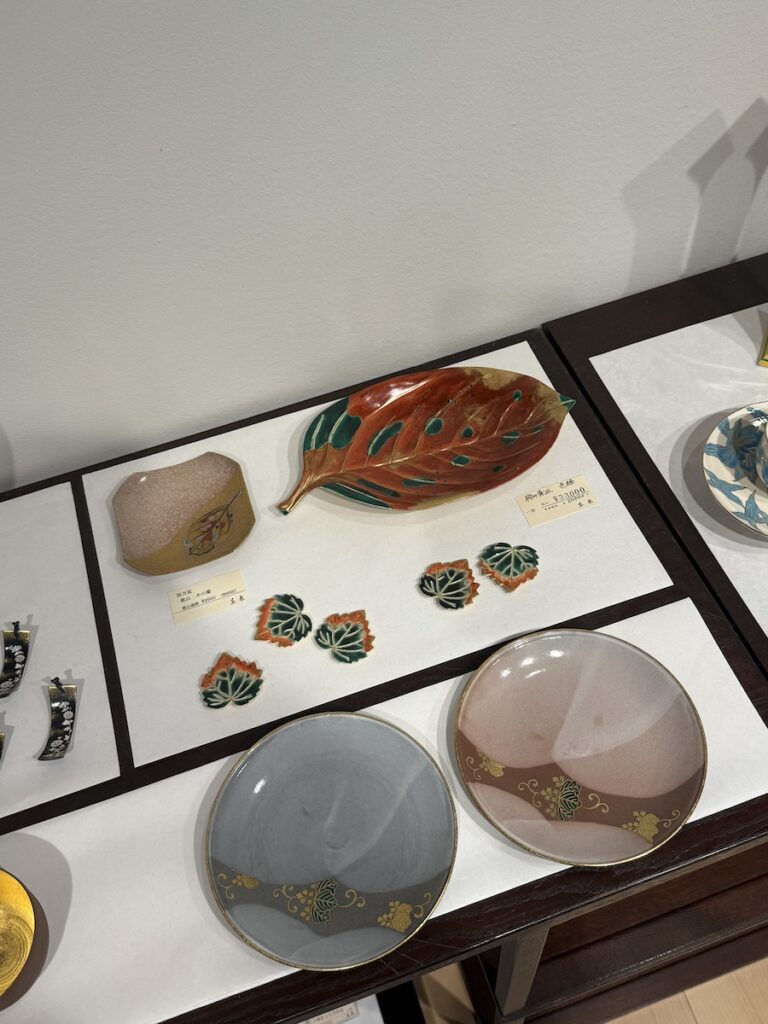
Another field trip that was very memorable was my visit to Tosai 巧芸陶舗 東哉, a ceramic studio located in the Kiyomizu Gojo area of Kyoto. Yamada Yoshio, the current owner of the Tosai workshop, introduced the studio’s ceramic works in the display room to us. All of the ceramics are handmade with fine details by skilled artisans, and the works are all based on traditional Kyoto ware that captures the elegance of Kyoto. We also had the opportunity to visit the painting room within the house, where the pottery and porcelain are painted. The artisans were working on a set of plates devoted to a kabuki commission. Watching them paint was almost meditative because they worked so carefully and slowly, ensuring every detail was perfect.
A key concept of Japanese ceramics that was emphasized during the talk was how ceramic designs took inspiration from nature and the four seasons. In the traditions of Japan, there is importance in matching the tableware to the season. With this in mind, shape design, surface pattern, and color are all carefully thought out. For example, the pink Sakura plate would be used in spring when the flowers are blooming. Not only does the pattern design match the season, but the shape design also varies. To offset summer heat and humidity, low open bowls and plates are used in contrast to winter tableware, where higher bowls are used to retain the heat of the food. People have different sets of tableware dedicated to each season and will switch between them throughout the year. Furthermore, during the most important New Year holiday, tableware with designs of bamboo, plum, and pine that are considered symbols of happiness is used during this season to uplift the holiday spirit. Through this aesthetic consideration, the Japanese daily lives are deeply connected to nature.
Visiting these artisans’ workshops in Kyoto made me realize that there are traditional crafts that face the danger of disappearing in modern society. This really made me reflect on the sustainability of being artisans in today’s world. The survival of lacquer craftsmanship not only depends on the heritage of technical skills but also on a whole network behind the production of lacquerware, which includes natural resources and specialized tools. It is very disheartening to see how traditional crafts are about to disappear, and future generations may not even be aware of these traditions.
Furthermore, unlike industrial and product designers, artisans cannot sell products at a large scale and cheap price. Every artwork is unique and created by hand with a great investment of time. However, the consumer culture today prioritizes speed and affordability over craftsmanship. Moving forward, I hope more people will recognize and appreciate the beauty of handmade objects, so traditional crafts can continue to exist.