

By Charlotte Li ’28
When we think about what language can do for us, we often imagine it as a key that could unlock grand possibilities. It could open the door to new careers, unlock a foreign world and culture, and connect us to new people. We imagine language as a passport to somewhere else, a tool for exploring the unfamiliar, the exotic, the far away.
However, we often forget the very basic function of language: to communicate. Not to transmit information across borders or centuries, but to connect with the people sitting right next to us, to hear the stories at our own dinner tables, to truly know the people we love most.
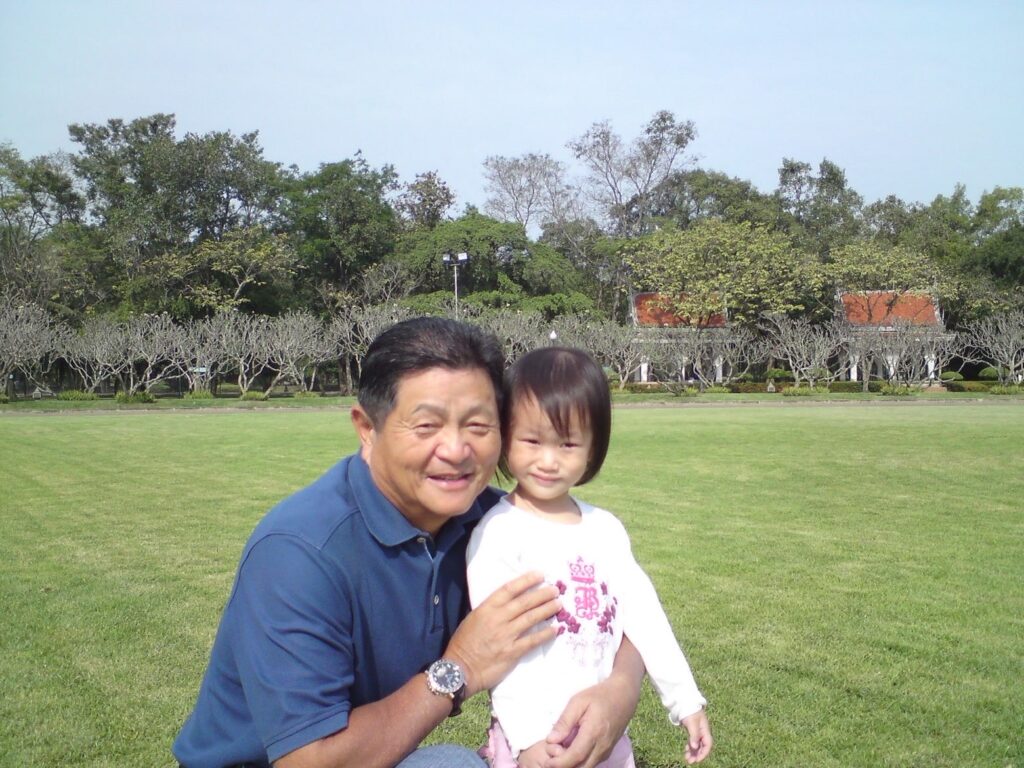
Proud is a sophomore at Wes, and she grew up in Bangkok as a Thai-Taiwanese kid. As a child, she spoke Thai and English in school, but going to an international school at an early age made English her strongest language. Chinese is what she’s most frustrated with. She was sent to a Chinese Sunday school when she was young by her
Taiwanese grandfather, who wished that she could connect to the language and
Taiwanese culture. But Chinese never quite stuck for Proud. She recalls a time when her grandfather had her sit next to him and do her homework– she would always try
tricks to avoid it or use Google Translate secretly.
Throughout her life, Proud has had countless opportunities to pick up Chinese again– classes offered, language apps downloaded, fresh starts attempted. But each time, the momentum faded at some point. This pattern troubles her– the repeated starts and stops, the good intentions that dissolve into guilt. Why does Chinese cause her so much frustration? Why does it feel so hard when Thai came so naturally? And yet, despite all these struggles, she still wants to learn Chinese. Why?
She told me a story about her grandpa. Once, her grandpa was trying to tell her a story about him navigating airport security, some strategy he’d discovered. He knows exactly her Chinese level, so he often only speaks words he thinks she might know, switching to simple Thai when Chinese fails, using hand gestures and expressions when language fails. She listened intently, trying to catch every word she knew and put them together. Mostly, though, she laughed. Not because she fully understands, but because laughter is the only response she can offer when she cannot formulate more questions or an
interesting response in Chinese.

Speaking with her grandmother, however, was never like that. Proud’s grandma speaks Thai, so their conversation flows effortlessly. There is no searching for vocabulary, no puzzling out half-understood sentences, and the conversation goes back and forth endlessly. Despite the language barrier, what Proud always feels clearly and never fades is the love and excitement his grandfather was trying to share. Love comes through in how he simplifies his Chinese for her, uses exaggerated body language, and
refuses to let the language barrier stop him from trying to share his life with her.
This is why she wants to learn Chinese. Not because it opens her to a bigger world, but because she wants to truly talk with him. She wants to understand the airport security story without guessing. She wants to respond with more than laughter. She wants access to the fullness of who he is. She wants to hear the jokes that cannot be translated and the stories told in his own words.
Her grandfather recognized this need years ago when he sent her to Chinese Sunday school. He understood that language is not merely about communication. It could be a bridge between generations, a vessel for family stories, a way of saying “I want you to know me.”
This is the power of language that moves me most, not as an achievement or status, but as a connection. Proud’s story reminds us that the most compelling reason to learn a language isn’t about career advancement or cultural sophistication. It’s about love. It’s about wanting to close the gap between you and someone who matters, even when closing that gap is hard, even when you’ve failed before, even when you’re not sure you’ll succeed this time either.
Love doesn’t make language learning easy. But it makes the difficulty meaningful. And sometimes, that’s enough to try again.