

By Leila Bensrhir ’28

Have you ever watched a foreign-language movie with subtitles and wondered whether you’re actually getting the full story? Or listened to a song in another language, looked up the lyrics, and realized the English translation somehow feels completely different?
That’s the funny thing about translation. We rely on it constantly, but translating isn’t nearly as simple as replacing one word with another. From Shakespeare being performed around the world to Korean dramas becoming international sensations, translation allows stories to cross linguistic and cultural boundaries. But how much of the original meaning actually survives?
One of the exercises we frequently do in my language class is to look for idioms, expressions whose meanings can’t necessarily be understood by translating each word individually. In Arabic, for example, the expression على عيني وراسي (ala aini wa rasi) literally translates to “on my eye and head.” But rather than describing anything physical, it’s a way of expressing respect, willingness, or wholehearted agreement. Exercises like these have become one of my favorite parts of language learning because they reveal how much culture exists within everyday speech. They also remind me that knowing every word in a sentence doesn’t necessarily mean understanding what someone is saying.
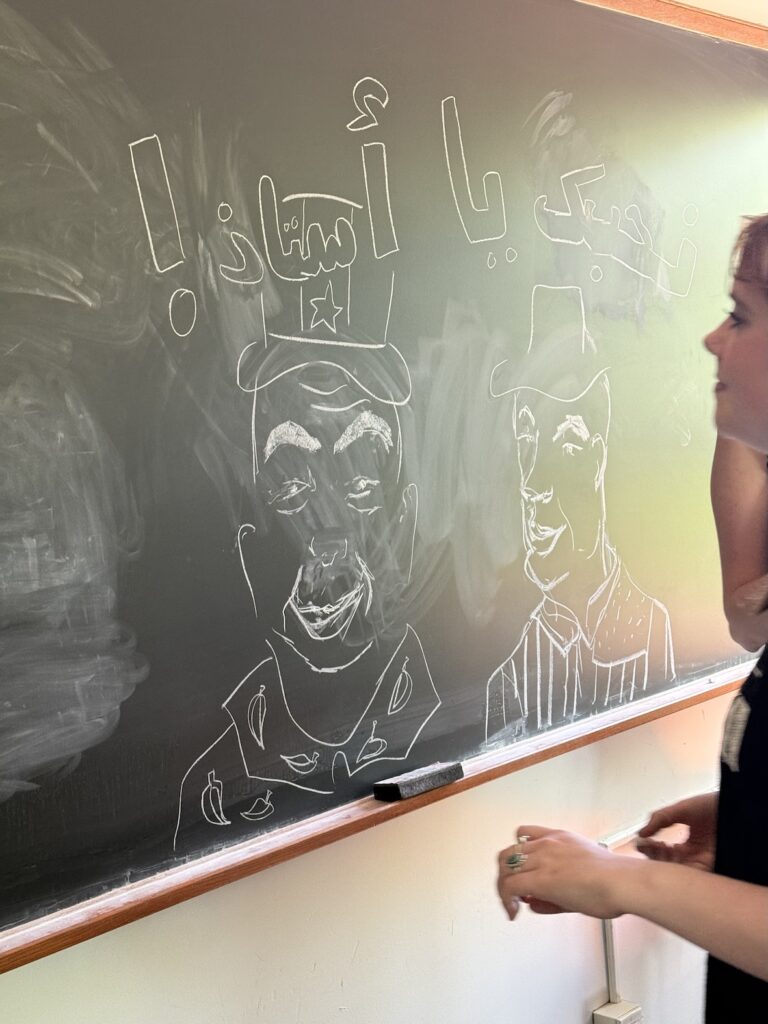
This challenge extends far beyond the classroom. Think about how difficult translating Shakespeare must be, with all his puns, metaphors, and double meanings. Translators often have to choose between preserving the original wording and recreating the humor or emotion for a new audience. The same happens in modern entertainment. In Korean dramas, for example, the word oppa (오빠) can refer to an older brother, but it can also be used to address an older male friend or romantic partner. Translating it simply as “brother” might completely change how an audience interprets a scene. Sometimes, translators actually have to change the words to preserve the meaning.
It’s easy to focus on everything that gets lost in translation, but we shouldn’t overlook what translation makes possible. Without it, many of us would never have discovered our favorite international films, novels, or television shows.
So, the next time you’re watching a K-drama, reading a translated novel, or listening to a song in another language, consider what might be happening behind the scenes. If you’re learning another language, try looking into its idioms. You might discover that some of the most interesting expressions are the ones that make absolutely no sense when translated word for word. Learning a language isn’t just about understanding what people say. It’s about understanding what they mean.