

By Zaynah Almasri ’27, Leila Bensrhir ’28 and Julia Fedoruk ’26
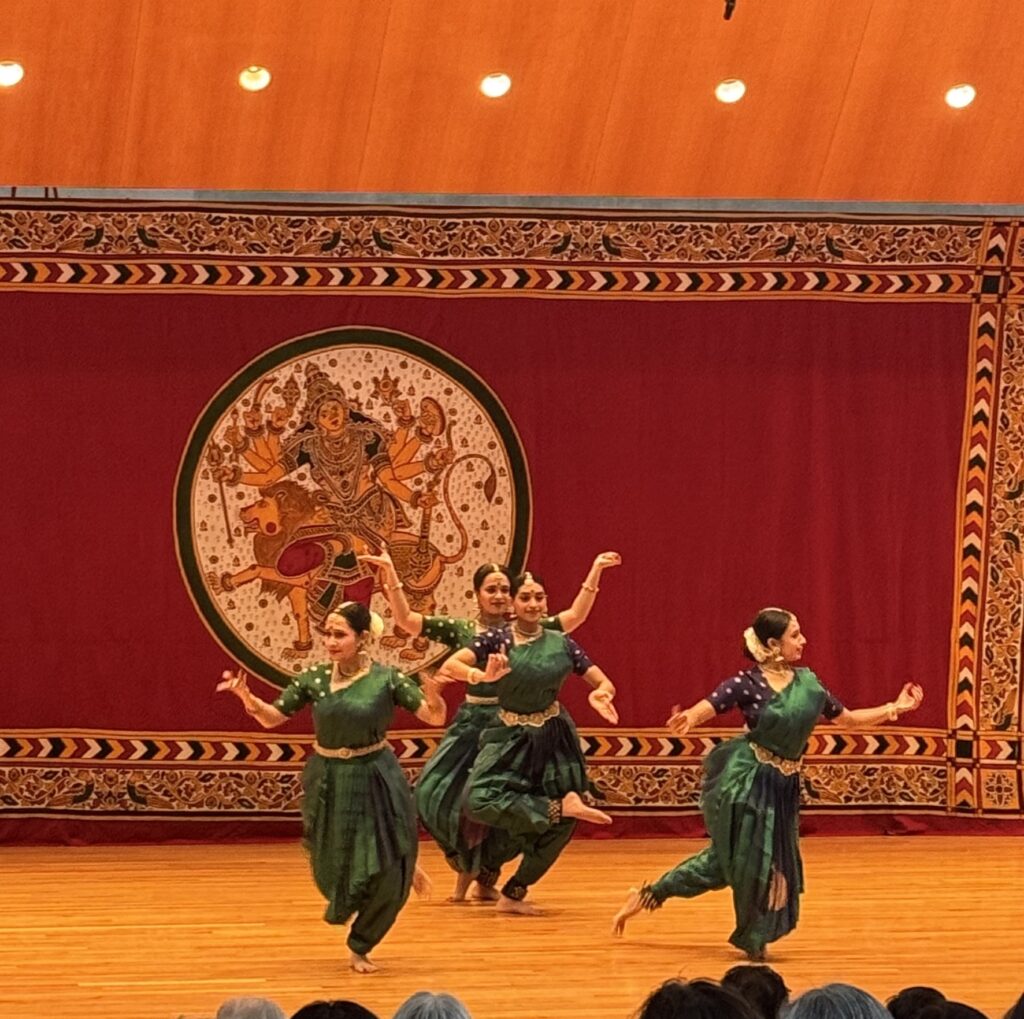
Wesleyan hosted its 50th annual Navaratri Festival from October 8th through 11th 2026. The oldest continually running festival of its kind in the United States, it celebrates new beginnings through music, dance and conversation. This year, the festival featured guest artists T. M. Krishna and the Kalanidhi Dance Company.
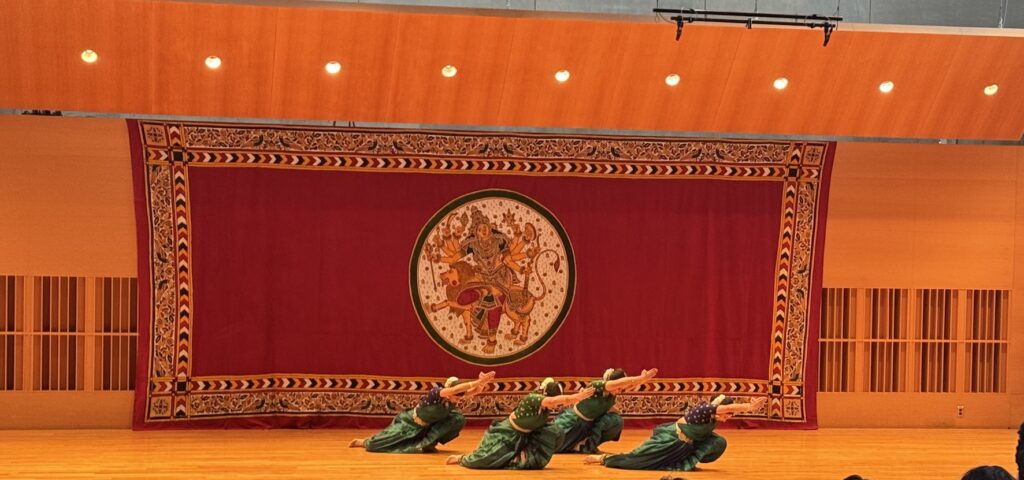
On Sunday, October 11, a crowd, including article authors Zaynah Almasri ’27 and Leila Bensrhir ’28, flocked to Crowell Concert Hall to attend Nritya Malika: A Garland of Dances, a performance by the Kalanidhi Dance Company celebrating Kuchipudi, a classical dance tradition from South India. The performance offered a chance to experience South Asian culture through movement, music, storytelling, and spirituality.
Watching the performance made us appreciate how much a dancer can communicate without saying a single word. Through intricate footwork, hand gestures, facial expressions, and rhythmic movements, the dancers brought stories and emotions to life. The performance showed us that dance is more than entertainment. It can preserve cultural traditions, express religious beliefs, and connect audiences to histories that might otherwise feel unfamiliar. The combination of movement and Carnatic music, the classical music tradition of South India, made each piece feel like its own story.
Each dance introduced a different aspect of Hindu mythology and philosophy. Saraswati Vandanam honored Saraswati, the goddess of wisdom, music, and learning, while Ardhanareeswara Stotram explored the unity of Shiva and Parvati through the image of a single body combining masculine and feminine qualities. Another piece brought together Ganesha, Hanuman, and Krishna, highlighting wisdom, humility, and spiritual vision. We found it especially interesting how these stories were communicated through physical expression rather than relying on spoken explanations. The dancers’ movements helped make complex religious and philosophical ideas accessible to the audience.
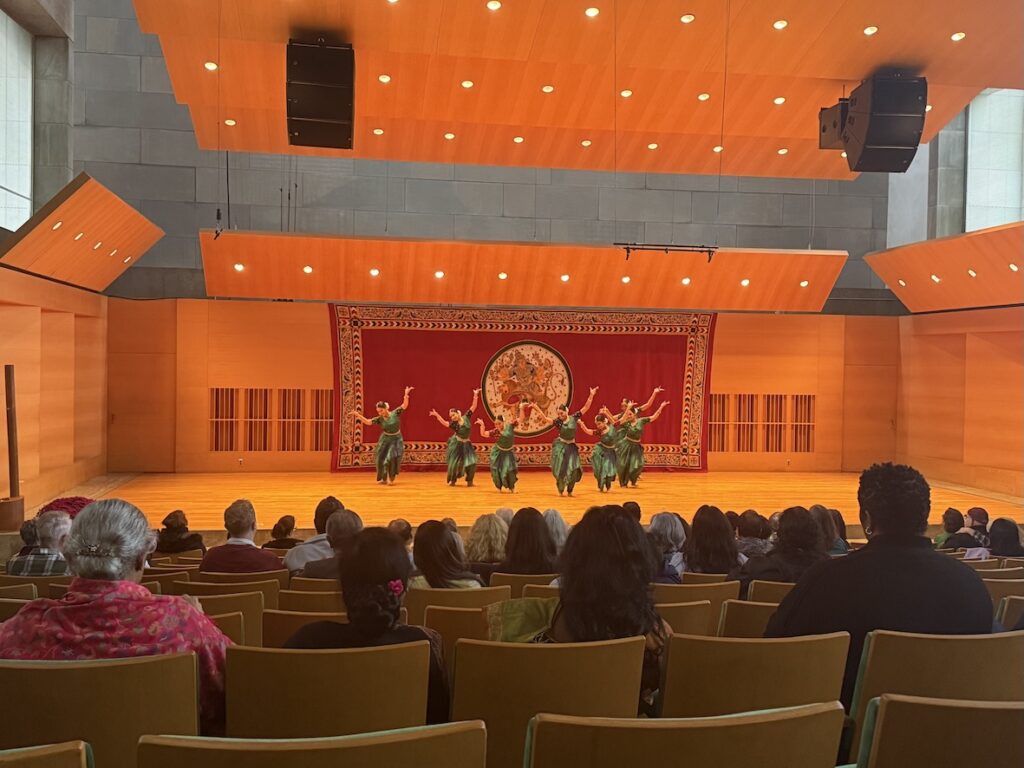
The performance also challenged us to think about how culture is experienced and understood. Even when an audience member may not be familiar with every story or religious reference, the emotion, discipline, and artistry of the performance can still create a connection. We were reminded that learning about another culture does not always have to begin with reading or studying. Sometimes, simply being present, watching, and remaining open to unfamiliar traditions can be just as meaningful.
The closing performance, Mast Qalandar, offered a different energy, drawing inspiration from a poem attributed to Amir Khusrow and featuring music by Sami Yusuf. Its celebration of devotional joy demonstrated how cultural traditions can evolve while maintaining their spiritual significance. Seeing traditional and contemporary influences brought together reinforced the idea that culture is not frozen in the past. It continues to develop through the people who practice, perform, and share it.
Events like Nritya Malika are an important part of the Wesleyan experience because they encourage students to engage with cultures beyond their own experiences and academic disciplines. The performance gave us a greater appreciation for the relationship between art, religion, history, and community in South Asian traditions. It also reminded us how much there is to learn by taking advantage of the cultural opportunities available on campus.
For students interested in continuing that exploration, Wesleyan offers courses through Global South Asian Studies (GSAS), including opportunities to study Hinduism, Urdu, and other aspects of South Asian history, languages, and culture. Attending a performance is a wonderful introduction, but pairing these experiences with classroom learning can provide a deeper understanding of the traditions and communities behind them. Whether through dance, language, or cultural studies, there are many ways to continue learning about South Asia right here at Wesleyan.