

By Bre Jordan ’27
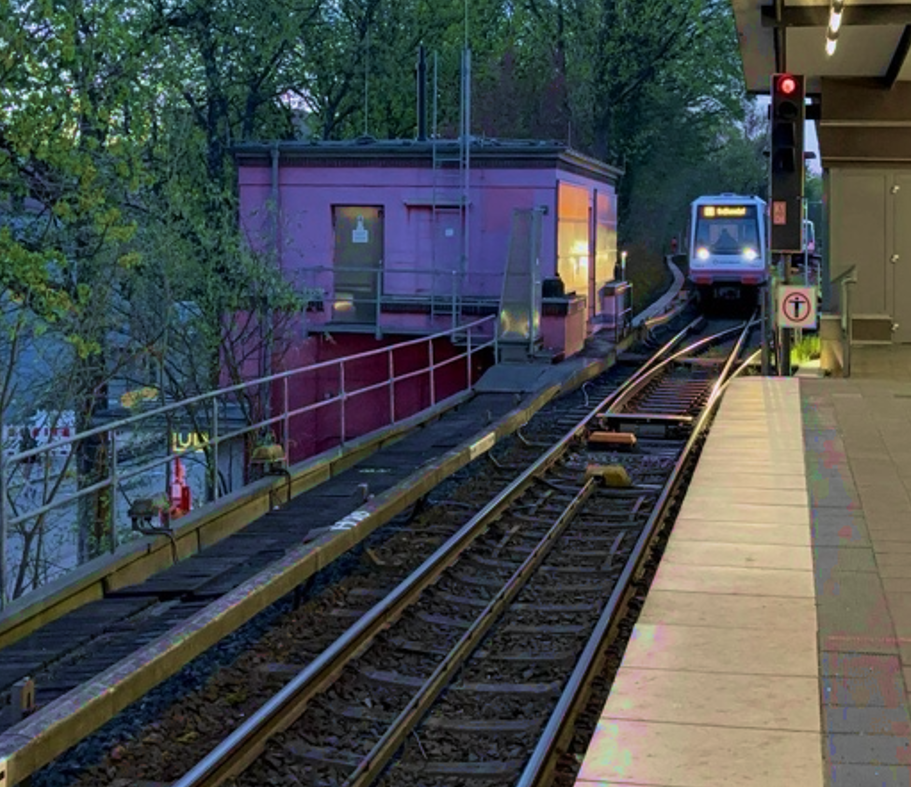
I pride myself on being good at directions, but I am forever getting lost in Hamburg. The Pearl of the North is a beautiful, modern city with a sophisticated public transportation network I rely on daily. Truly they make it very easy to use: trains and buses display the upcoming stops on small screens, the black-and-yellow displays list major stations so you can be sure you’re heading the right direction, and boards pop up everywhere to mark the way to popular spots and connections—you just have to read the signs.
Unfortunately, I am also easily distracted and have confidently boarded many right lines in the wrong direction, failed to exit several trains, and once even forgot which bus I was riding, which made for quite the trek home. That’s okay, though, my missteps always land me somewhere interesting and give me the opportunity to get to know my home for the summer a little better.
In the month and change I’ve been in Hamburg, I’ve had to learn a lot about reading signs. And not just the ones along the U-Bahn, but also my own.
I’ve had chronic back pain since I was a kid, and I usually ignore it, but between traveling, carrying my things with me all day, and cooking more, it got kind of out of hand. I’ve been forced, admittedly against my will, into learning to read the signs my body gives me and make space for the things I need along with the things I want.
I’ve learned to listen the first time my back tells me I’m doing too much instead of the fourth, to take breaks even if I feel like I could go a bit longer, and to do all of the hard things: communicating clearly, remembering to take ibuprofen before I spend an hour chopping vegetables, and using the loud wheeled backpack thing (my wonderful Hackenporsche) even if it makes me feel like an old lady.
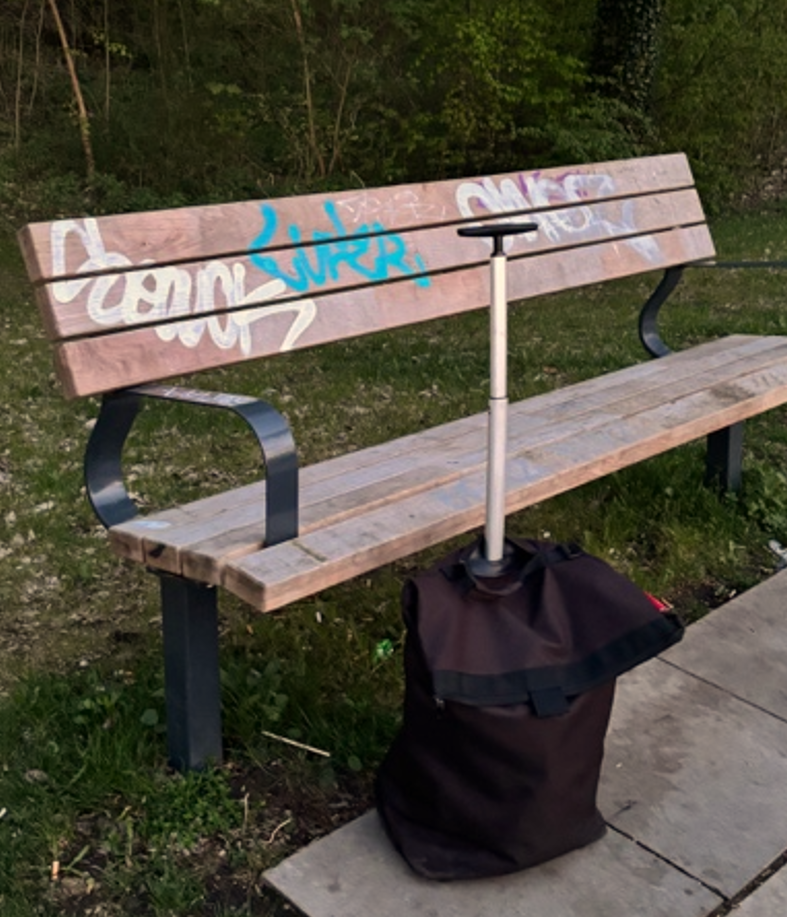
As I’ve started paying closer attention, I’ve realized that I’ve apparently been ignoring a lot of signs. And I’ve found there’s real joy in reconnecting with my body. Nothing wrong with taking a break from studying to eat when you notice you’re hungry, or going to bed at 7pm if you’re tired, or skipping a night out if you could really use some time curled up in bed with a book you know quite well.
It’s an adjustment and a work in progress, but the more I’ve slowed down and started reading all the signs around me, the more I’ve noticed how much is being said—not in Deutsch, but in everything else.
From the cashiers who point at things when I give them the blank look of someone who hasn’t yet realized just how many words there are for receipt in German, to the gentleman in the nearly full elevator who gave me a confused look and mimed “down” when I tried to ask which way it was going, so many of my interactions would have been impossible without gestures and body language.
And the Germans I’ve encountered have so many other things to say: they glare at people who jaywalk and talk too loudly on the phone, they lean away when someone sits next to them on the bus to give them more space and claim some of their own, and they will always tell you exactly where not to sit on the train before you’ve even had a chance to see for yourself.
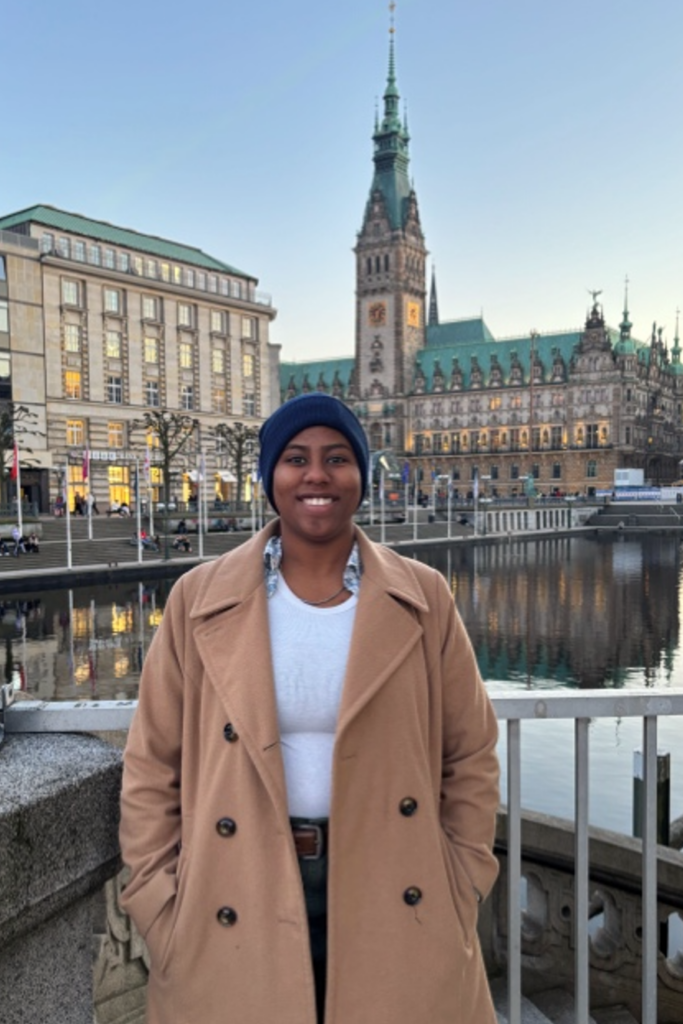
What I appreciate most, though, of all the things the Hamburgers say in their little rules and unspoken conversations, is how little they have to say about you. Before I arrived, I was far too worried about drawing attention as a gender-nonconforming Black kid in Europe. But while I have yet to meet any other Black girls with shaved heads who enjoy blazers and combat boots in equal measure and carry a Hackenporsche everywhere, no one else seems to care. They don’t stare, they don’t comment—I don’t think they even notice—and this German version of politeness has its charm.
Hamburg has been teaching me to read the signs, the ones across the city, between its people, and within myself; and with three months to go, I’m hoping to learn a few more. For me, though, the most important signs are the ones that aren’t there: no one is watching you as closely as you think. So, do the challenging things, take time to rest, and don’t be afraid to get a little lost.